

I did not own a pellet grill when I bought my first bag of Traeger Signature Blend pellets, and I still don't, not really. What I own is a mesh smoker tube that sits inside my twenty year old charcoal kettle, and every few months I borrow my son-in-law Paul's actual Traeger hopper grill for a weekend when I want to cook low and slow for a crowd. That distinction matters more than most reviews admit, because it means I've run these pellets two completely different ways, smoldering slowly in a tube for pure flavor, and burning as actual fuel in a real hopper doing the whole job of heat and smoke at once. Those are not the same test, and the bag doesn't tell you that.
I already told the long story, a whole season with these pellets, over in my long-term Traeger Signature Blend review. This one is different. This is the review where I tell you what actually surprised me, the parts that don't make it into the bullet points on the bag: what Signature Blend is really made of, how mild the smoke actually tastes compared to what the name implies, the dust waiting at the bottom of every bag, the moisture problem that ruined half a bag of mine, whether it really matters that I ran Traeger pellets in a grill that wasn't a Traeger, and whether the price per pound makes any sense once you do the math against plain hardwood.
The Quick Verdict
Clean burning, consistent, and genuinely food safe, but the smoke flavor is milder than the name suggests and the bag isn't quite as simple as the marketing implies.
Amazon Check Today's Price →Before You Buy a Bag Assuming It's Just Wood
Traeger's Signature Blend pellets burn cleaner and more consistently than most bargain bags I've tried, but there are a few things worth knowing before you commit a whole hopper to them. See today's price and current availability on Amazon.
Amazon Check Today's Price on Amazon →How I've Actually Cooked With Them
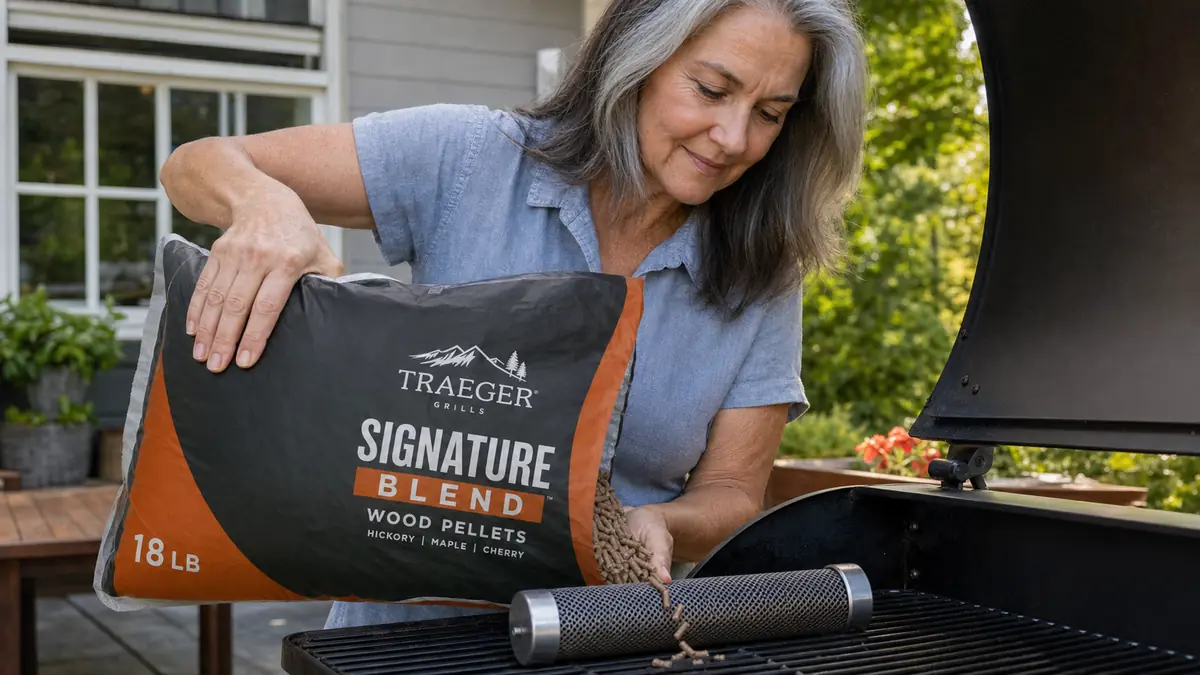
My setup is not what Traeger pictures when they photograph that bag. Most weeks I'm sprinkling a handful of Signature Blend pellets into a smoker tube, lighting one end with a torch, and setting it inside my charcoal kettle next to a pile of lit briquettes for a two hour cook, usually chicken thighs for Sofia and Marco because they eat plain grilled chicken all summer without complaint. That's a low and slow smoke flavor test, not a real burn test, because the pellets in a tube just smolder, they never combust the way they do inside a hopper feeding an auger.
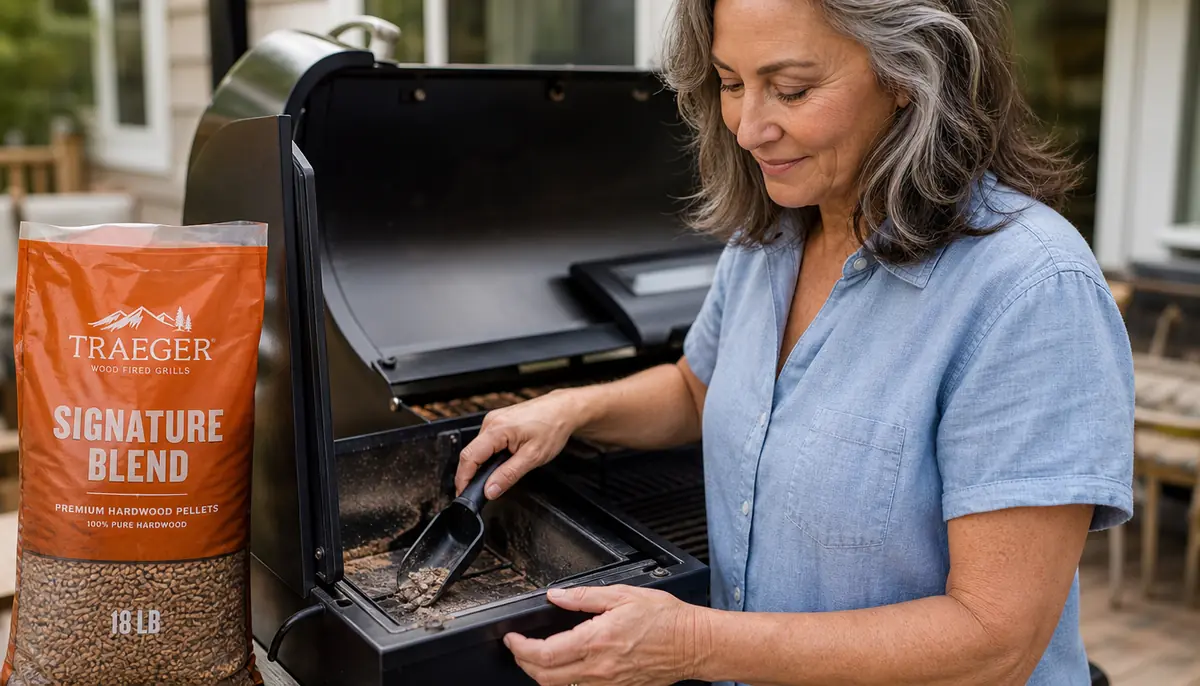
The real test came the two weekends I borrowed my son-in-law Paul's Traeger for a full pork shoulder when Nina and Paul brought the grandkids over, and again for a rack of ribs on a Sunday when Bev showed up with her usual bowl of something sweet and nobody left before dark. That's where I saw how the pellets actually behave as fuel, not just as flavor, and it's a different animal. The hopper burns through pellets fast, the auger has opinions about pellet size and dust, and Ray, who handles the music and nothing else in my kitchen, was the one who pointed out how much ash came out of the cleanout after just one long cook.
Cleanup told its own story. After the pork shoulder cook in my son-in-law Paul's Traeger, the burn pot held a fine, powdery ash, barely a cup after roughly ten hours of cooking, which is genuinely impressive next to a charcoal kettle where I'm hauling out ash by the coffee can. My smoker tube setup barely produces ash at all, since it's only smoldering a handful of pellets rather than burning through pounds of fuel. That contrast is part of why I keep going back and forth between the two setups instead of just committing to buying my own pellet grill outright.
What's Actually in a Bag of Signature Blend
Traeger markets Signature Blend as 100% all natural hardwood, and reading the bag, that much checks out. There's no oil listed, no filler, no scent additive, which matters because plenty of cheaper pellet bags I've bought over the years do list a food grade binder or a flavoring oil sprayed on. What Traeger doesn't spell out clearly is the exact ratio of the blend. The bag references a mix built around oak with hickory and maple in the mix, but you won't find percentages anywhere on the packaging, and Traeger doesn't publish them online either. You're trusting the name more than the label.
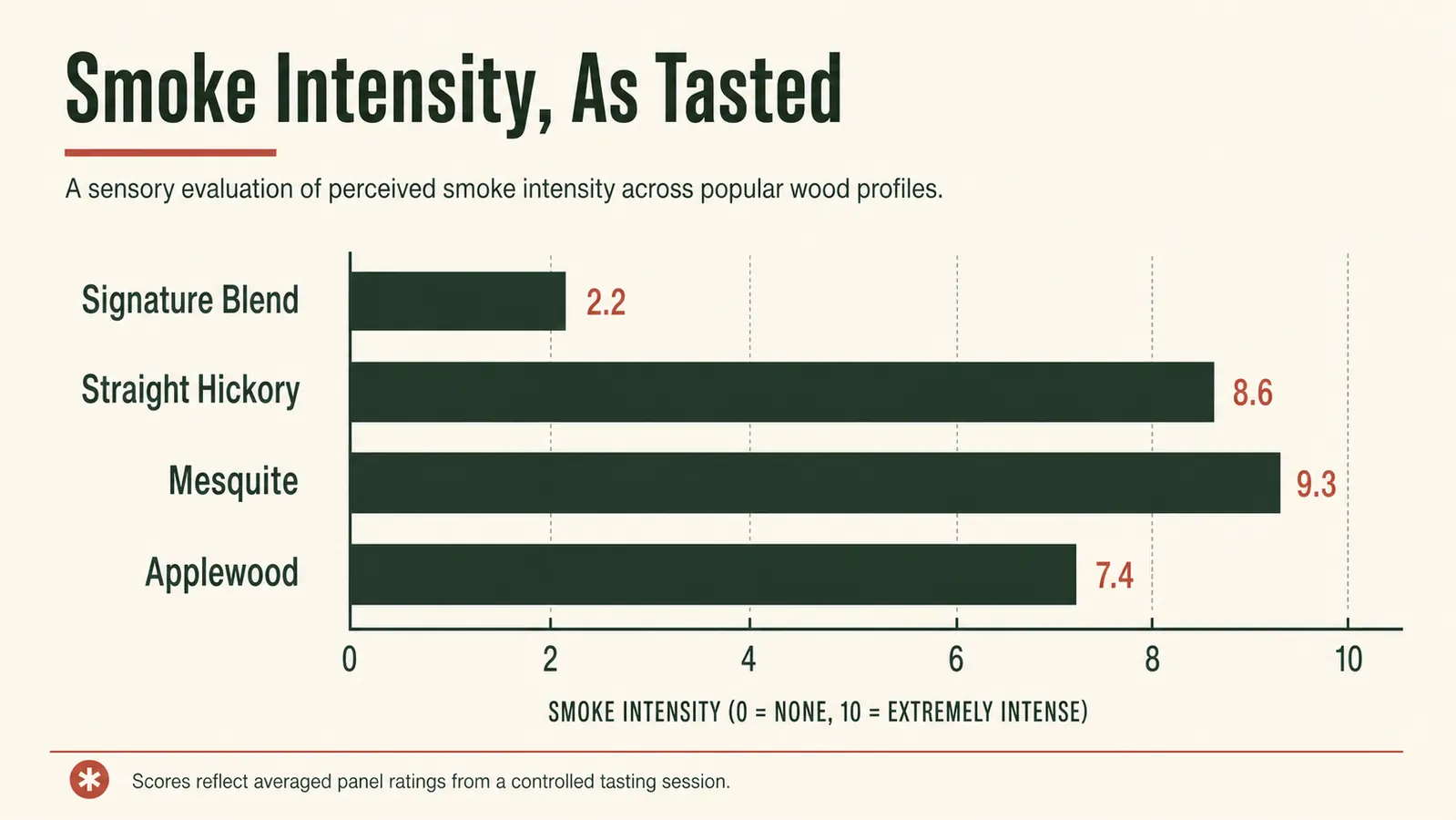
That vagueness bugged me more than I expected it to. When I buy a single species bag, apple, cherry, mesquite, I know exactly what flavor I'm loading into the smoke. Signature Blend is Traeger's version of a house blend, and house blends are built to be inoffensive and consistent more than they're built to be bold. That's not dishonest, it's just a different goal than a lot of buyers assume when they see hickory listed as an ingredient and picture a strong hickory smoke. What you actually get is closer to a background note than a headline flavor.
The Smoke Is Milder Than the Name Suggests
This is the complaint I see most often once I started reading other buyers' notes, and I agree with it. The pork shoulder I smoked in my son-in-law Paul's Traeger came out tender with a light, visible smoke ring, but the flavor was subtle, noticeably lighter than what I get from straight hickory chunks on the charcoal kettle. Sofia, who is nine and has strong opinions about food, ate it without a single complaint about it tasting like smoke at all, which for a kid is a compliment, but for Ray, who grew up eating his father's mesquite brisket, it read as underwhelming.
Part of this comes down to how pellet grills work in general, lower ambient smoke than a charcoal or offset setup produces, and part of it comes down to Signature Blend specifically being formulated as an easy, everybody-likes-it flavor. If you're coming from a stick burner, or you're used to loading a smoker tube with straight hickory pellets the way I usually do, expect Signature Blend to taste noticeably tamer. If you've never smoked anything before and you're worried about oversmoking a first brisket, that same mildness is actually a safety net, it's genuinely hard to ruin food with these.
Dust, Fines, and the Moisture Problem Nobody Warns You About
Every bag of pellets breaks down some in transit and storage, that's true of every brand, but I want to be specific about what I found. The bottom two or three inches of my second bag were mostly sawdust and broken fragments, what people in the pellet world call fines. In a smoker tube this barely matters, fines just burn along with everything else. In my son-in-law Paul's hopper grill, a buildup of fines at the bottom of the hopper caused a brief auger jam mid cook on the rib weekend, and we had to shut it down, clear it, and restart, which is not a five minute problem when you have a full table waiting on food.
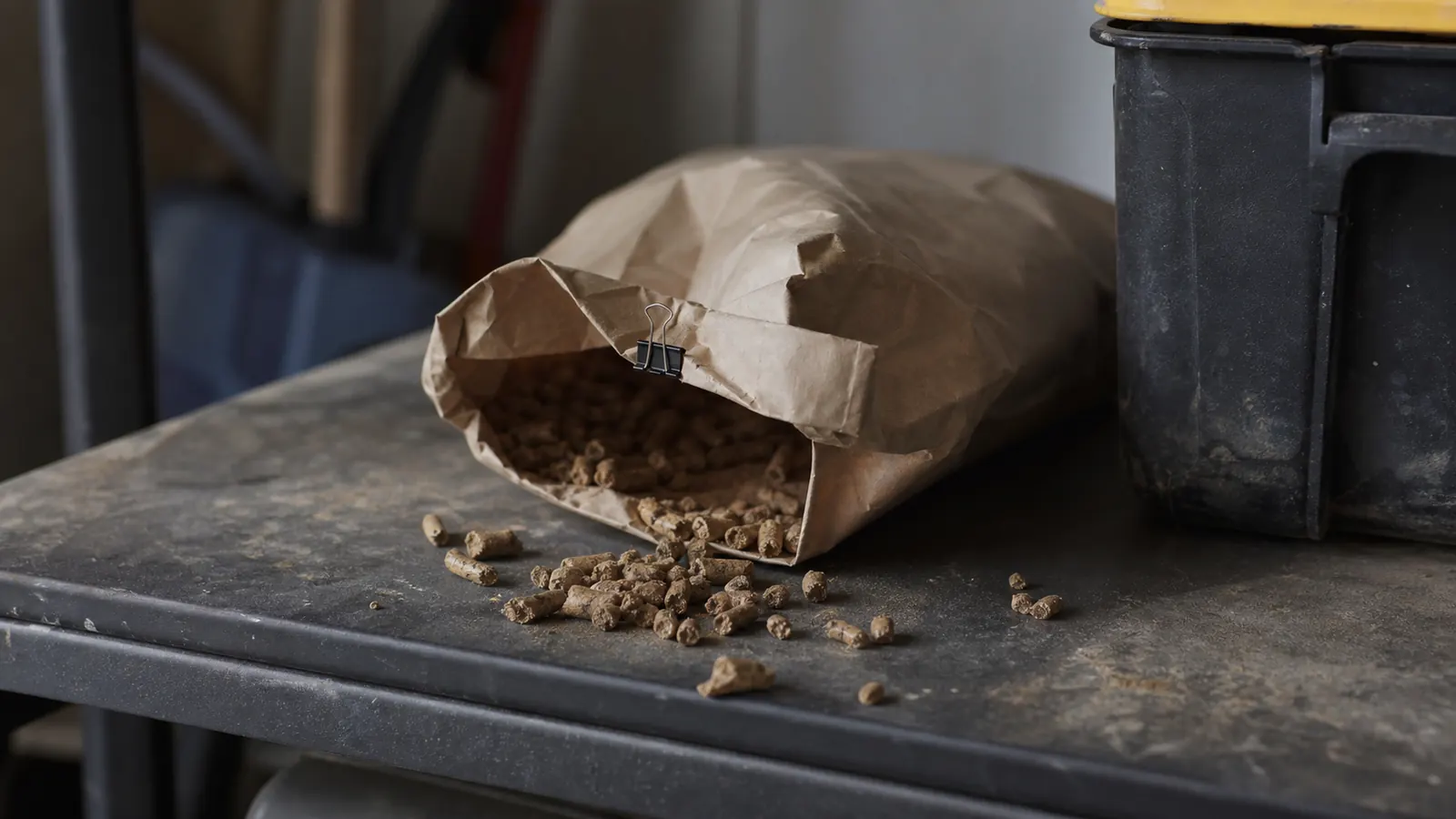
The bigger issue was moisture, and this one is genuinely on me as much as it is on the pellets. I stored an open bag in my garage over a damp stretch, not in an airtight bin, just folded shut with a clip, and by the time I went back to it the pellets near the top had swelled slightly and gone soft enough that they crumbled instead of holding their shape. Wood pellets are basically compressed sawdust held together by their own natural lignin, no glue, which is great for the 100% natural claim and bad for shelf life once humidity gets in. That bag never burned right again, it smoked heavier and dirtier, more smolder than clean combustion.
If you take one thing from this section, it's that an open bag of any pellet, Traeger included, needs to go into a sealed container almost immediately, not stay in the paper bag with a clip on it the way I first did. I keep a five gallon bucket with a gamma lid in the garage now specifically for this, and I haven't had a soft or clumpy pellet since. That's not really a Traeger flaw, every hardwood pellet has this weakness, but Traeger's marketing about all natural, no additive pellets doesn't come with a warning label about what humidity does to a bag with no binder in it.
The smoke is honest, mild, and reliable. It is not the bold hickory hit the name on the bag might have you picturing.
Does Matching Your Pellet Brand to Your Grill Actually Matter
Paul's grill is a Traeger, and I ran Traeger pellets in it, so I can't fully test the brand-matching question the way someone with a different pellet grill could. But I asked around, and I read enough forum threads and a few grill manufacturer FAQs to feel comfortable saying this, for most pellet grills on the market, the auger and burn pot don't care what logo is on the bag, they care about pellet size and moisture content. A clean, properly sized hardwood pellet from almost any reputable brand runs fine in almost any pellet grill's hopper.
Where brand matching actually seems to matter is warranty language, not performance. Some grill manufacturers will point to non-brand pellets if you file a mechanical issue and try to argue against a warranty claim, whether or not the pellets caused the problem. That's a paperwork risk, not a burn quality risk. If you own the grill new and it's under warranty, it's worth checking the fine print before you load up on a cheaper off-brand bag. If you're running pellets in a smoker tube like I usually do, none of this applies, brand loyalty is purely a flavor and quality question at that point, not a mechanical one.
Price Per Pound vs Buying Hardwood in Bulk
Signature Blend costs more per pound than a big box bag of general purpose hardwood pellets, and it costs quite a bit more per pound than buying raw hardwood chunks or splits in bulk from a local supplier the way I sometimes do for the charcoal kettle. That's the honest math. What you're paying the premium for is consistency, a bag that burns predictably, low ash, fewer fines relative to bargain brands, and a flavor profile that's been tested to not offend anyone at the table. That's a real thing to pay for, it's just not free, and it isn't automatically worth it for every cook.
Where the math stopped bothering me was thinking about cost per cook rather than cost per pound. A smoker tube uses a small handful of pellets for a two hour session, so even a pricier bag lasts me a long time doing it my way. If you're running a full hopper through long cooks every weekend, the price gap between Signature Blend and a bargain bag adds up fast over a season, and that's exactly when it's worth shopping around or buying in bulk. For occasional use like mine, the premium barely registers against everything else a cookout costs. I've also started buying two bags at a time when they're in stock, since the price rarely dips low enough to call it a real sale, and having a spare on hand means I'm never scrambling before a cookout and reaching for whatever bargain bag is left on the shelf.
What We Liked
- Clean, consistent burn with genuinely low ash and no oil or binder additives
- Mild, blended flavor that's hard to oversmoke, forgiving for beginners
- Ran fine in both a borrowed Traeger hopper and a standalone smoker tube
- No off flavors or chemical smell even after a moisture mishap, once dried back out
Where It Falls Short
- Blend ratio isn't published, so you're trusting the name more than a spec
- Smoke flavor is noticeably milder than single species hardwood pellets
- Fines and dust at the bottom of the bag caused a real auger jam mid cook
- No sealed packaging against moisture, an open bag needs an airtight container fast
- Costs meaningfully more per pound than bulk hardwood or bargain pellet blends
Who This Is For
If you want a pellet that behaves the same way every single time, doesn't punish a first attempt at a brisket, and doesn't leave a heavy campfire smell on your clothes after a long cook, Signature Blend is a genuinely good choice. It's also the right call if you're feeding a mixed table, because the mild profile plays it safe for kids like Sofia and Marco and for guests who don't actually love a strong smoke flavor even if they'd never admit it out loud at my table.
It's also worth it if you value predictability over experimentation, since I've never had a bag surprise me with an off flavor or an unexpected burn pattern, which is more than I can say for a couple of bargain pellet brands I tried before switching over.
Who Should Skip It
If you're chasing a bold, specific wood flavor, straight hickory, mesquite, or a real fruit wood punch, Signature Blend will read as flat compared to what you're picturing from the name on the bag. And if you're running a full hopper every single weekend, it's worth running the numbers against a bulk hardwood option before you commit to a season of it, or read my Traeger vs Camp Chef pellet comparison to see how the flavor and price actually stack up against another popular blend.
It's also not the right fit if you're not going to be diligent about storage, since these pellets have no additive protecting them from humidity once the bag is opened, and a damp garage will undo the quality faster than you'd expect. If you can't commit to an airtight bin the day you open the bag, budget for more waste than the price tag lets on.
Know What You're Actually Buying Before You Load the Hopper
Signature Blend won't wow you with a bold smoke flavor, but it burns clean and consistent, which counts for a lot on a Sunday with a full table. Check today's price and current availability on Amazon.
Amazon Check Today's Price on Amazon →