
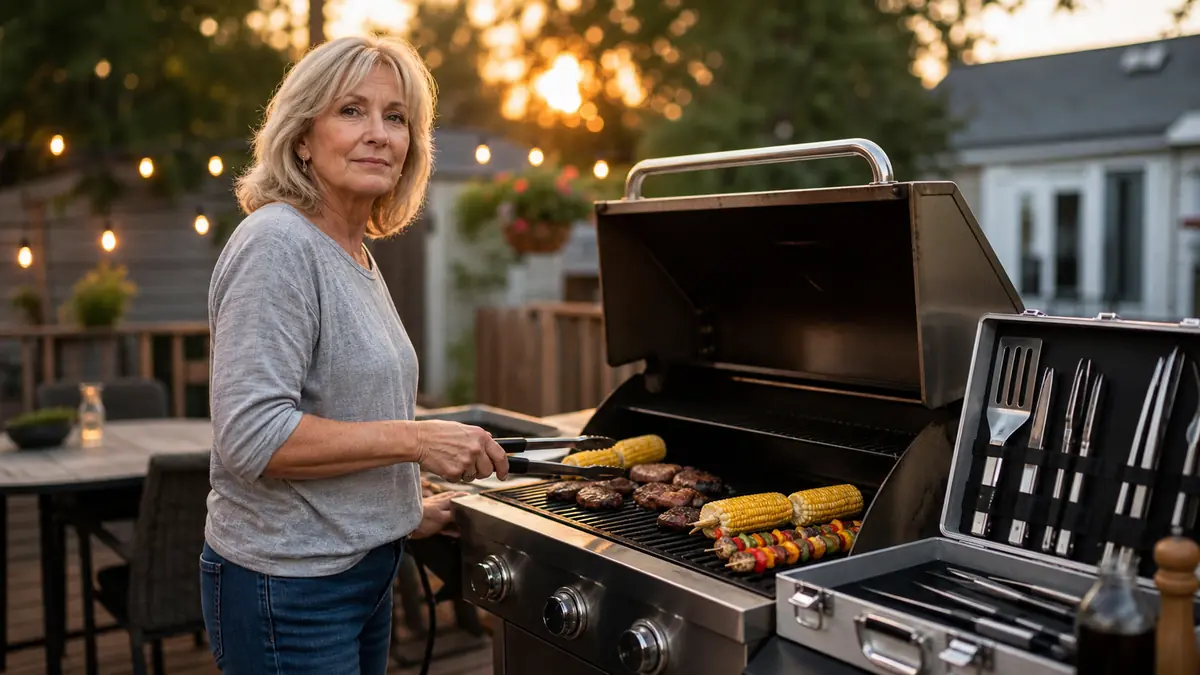
The first time I watched my son-in-law Paul try to flip four burgers with a warped metal spatula he'd grabbed from a gas station on a road trip, I finally understood why backyard grilling intimidates so many people who otherwise cook just fine indoors. It is not the fire. It is not the meat. It is showing up to the grill with the wrong tools and hoping for the best. I have been cooking for a crowd on my back deck for over twenty years, first on a charcoal kettle that still works fine, now mostly on a three-burner gas grill that Ray keeps threatening to replace. What changed everything for me was not a fancier grill. It was finally investing in a real set of grill tools, the POLIGO 22PCS Heavy Duty BBQ Grill Accessories Set, and learning to use each piece on purpose instead of digging through a kitchen drawer for whatever spatula didn't fall apart the last time.
Mastering backyard grilling is not about mastering a recipe. It is about mastering a small routine you repeat every single Sunday until it becomes muscle memory. Bev has been showing up to our place nearly every week for years now, and she will tell you the food tastes better since I stopped fumbling around and started reaching for the right grill tool the first time, every time. Here is the five step routine I actually use, the one that turned me from a nervous once-a-summer griller into someone who can run a full spread for twelve people without breaking a sweat.
Stop Digging Through a Junk Drawer Mid-Cookout
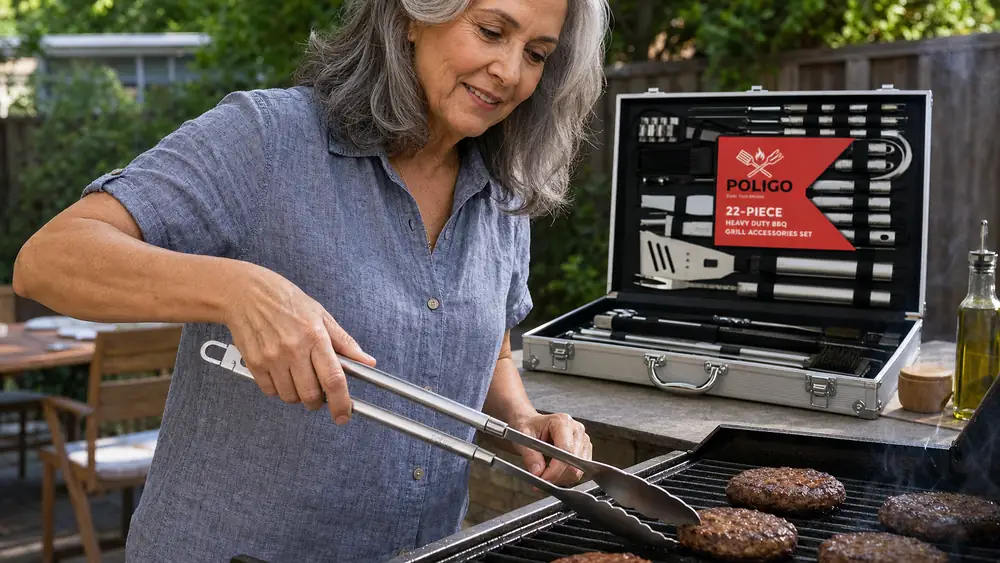
The POLIGO 22PCS set puts every grill tool you actually need in one aluminum case, so the right piece is always within reach before the food ever hits the grate.
Amazon Check Today's Price on Amazon →Step 1: Replace Your Mismatched Tools With One Real Set
For years I owned tongs from three different sets, a spatula with a cracked handle, and a basting brush that had lost half its bristles somewhere around the time Sofia was born. None of it matched, none of it was built for real heat, and I spent more time hunting for the right piece than I spent actually cooking. The fix was embarrassingly simple. I stopped buying one-off pieces and got a complete set instead.
The POLIGO 22PCS set solved that problem in one purchase because everything lives in one aluminum case that sits on my potting bench by the back door. Stainless steel spatula, locking tongs, a basting brush, a meat fork, skewers, corn holders, and a handful of other pieces I did not know I needed until I had them. When Paul comes over now, he does not dig through a drawer. He opens the case, and the right tool is already sitting there waiting for him.
The case itself became part of the routine too. It stays latched shut in the cabinet next to the grill between cookouts, so when Sunday rolls around I am not searching the garage or the kitchen junk drawer for a spatula that vanished sometime in June. Confidence at the grill starts with knowing exactly where your grill tools live before you ever light the fire.
Step 2: Learn to Read Your Grill's Heat Zones Before You Touch the Tongs
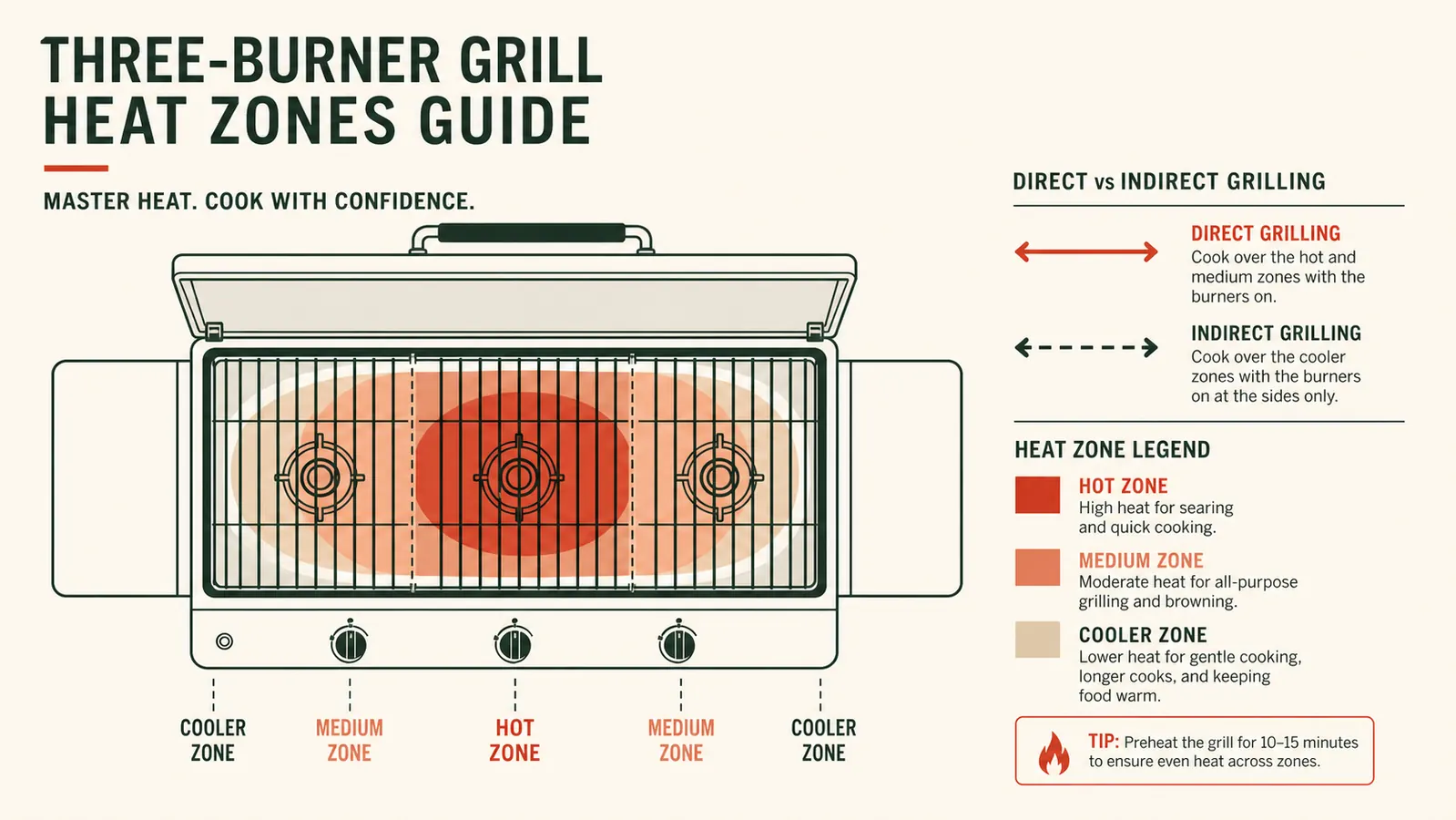
A grill tool set will not save you if you do not understand what you are cooking on. My three-burner gas grill has a hot zone on the left, a medium zone in the center, and a cooler zone on the right where I can hold food without it burning. Ray thinks I am being fussy when I point this out, but it is the difference between chicken that is charred outside and raw near the bone and chicken that is done all the way through with a nice crust.
Before anything touches the grate, I preheat with the lid down for a full ten minutes, then use the long-handled tongs from my set to test each zone with my hand held a few inches above the grate. Direct heat is for searing, quick cook times, and things like burgers and shrimp. Indirect heat, the cooler side, is where thicker cuts finish cooking without drying out on the outside. Once you know your zones, every tool you own gets more useful, because you are finally putting it in the right spot on the grill.
That heat zone habit paid off most last Fourth of July, when Bev brought her famous potato salad and we hosted eleven people off one grill. I moved chicken thighs to the indirect side the moment the skin got color, finished the burgers hot and fast, and kept corn on the cooler edge so it steamed instead of scorched. Nobody standing around the deck knew the difference between direct and indirect heat. They just knew everything came off ready at roughly the same time, which used to feel impossible before I understood my own grill.
Step 3: Match the Tool to the Protein, Not the Other Way Around
This is the step that took me the longest to learn, and it is the one that separates a nervous backyard griller from someone who looks like they know what they are doing. Fish needs a wide, thin, flexible spatula so the fillet does not fall apart when you turn it. Chicken thighs need long tongs with a firm grip so you can turn them without piercing the skin and losing all the juice. Corn needs the little two-pronged holders, not a fork jabbed straight through the cob, or you will be picking splintered wood out of dinner.
The stainless steel spatula in my POLIGO set has a slightly angled edge that slides cleanly under a salmon fillet without tearing it, which is something I never even thought to look for until I finally had a spatula built for the job. The basting brush matters too. Marco, my six year old grandson, loves helping me brush barbecue sauce on chicken in the last five minutes of cooking, and having a brush with real silicone bristles means the sauce goes where I want it instead of dripping through wire bristles onto the burner.
Sofia likes to build her own vegetable skewers now that she is old enough to help, sliding peppers and mushrooms onto the long metal skewers from the set while I handle anything raw. Having tools sized right for a nine year old to help with safely, away from the hot zones, is not something I expected to matter, but it does.
If you want a deeper breakdown of which specific pieces in a set like this earn their keep versus which ones sit in the case all summer, I wrote up my full experience after using this exact set for over a year in my long-term POLIGO grill tools review.

Step 4: Keep the Grill Clean As You Go, Not After
I used to save cleaning for the end of the night, after everyone had gone home and I was too tired to do it properly. That habit cost me flavor. Leftover char and grease from the last cookout mixes with whatever you are cooking next, and it is why food sometimes tastes bitter for no obvious reason.
Now I clean between rounds, not just at the end. Once the burgers come off and before the corn goes on, I run the grill brush over the grates while they are still hot, which takes maybe thirty seconds and makes an enormous difference. The case that comes with a proper grill tools set is not just for looks either. Mine keeps the brush separate from the food safe tools, so I am not touching a bristle brush and then handling raw chicken with the same hand. It sounds like a small thing until you have done it the messy way for a decade like I did.
I also learned to actually look at the brush I was using. My old wire brush had started shedding bristles months before I noticed, which is a genuinely dangerous problem if a stray bristle ends up stuck in a burger. The brush in my POLIGO set has a solid stainless head instead of loose wire bristles, and I still glance it over before every use out of habit. Cleanliness with grill tools is not just about taste. It is about making sure nothing metal ends up on someone's plate.
Step 5: Build a Serving Routine That Doesn't Rely on Guesswork
The last piece of mastering backyard grilling has nothing to do with the fire and everything to do with the last five minutes before food hits the table. I pull meat off the grill and let it rest on a cutting board for at least five minutes before anyone touches it, tented loosely with foil. That rest is when the juices redistribute instead of running out all over the platter the second you slice into it.
I also use the meat fork from my set to test for doneness on thicker cuts, feeling for resistance rather than guessing, and I keep a real instant read thermometer next to the grill for anything I am not sure about, which I wrote about separately in how I check doneness without cutting into the meat. Between the right grill tools and a thermometer, I have not served a dry chicken breast or a bloody burger in longer than I can remember, and that consistency is the whole reason people keep showing up on Sunday.
I also set a simple rule for myself years ago. No protein leaves the grill without going through the same three checks, color, resistance, and if I am unsure, temperature. It sounds rigid for a backyard cookout, but that small bit of structure is exactly what let go of the anxiety I used to feel every time I hosted. Marco does not remember a version of Sunday dinner where the burgers were pink in the middle, because there has not been one in years.
What Else Helps
A good grill tools set gets you most of the way there, but it is not the only thing that makes backyard grilling feel effortless. Heat resistant gloves matter more than people expect, especially once you start moving a hot cast iron pan or adjusting charcoal with your bare hands the way I used to before Nina bought me a proper pair. Good background music helps too, Ray handles that part and always has, cranking something from his old sound engineer days through a little speaker on the deck rail while I work. And if you are trying to decide between building a set yourself piece by piece or buying a complete kit like mine, I put together a side by side breakdown in POLIGO versus a Weber tool set that walks through what actually matters when you are comparing two options.
If you smoke as often as you grill, the fuel matters just as much as the tools do, and I put together a separate guide on choosing wood pellets for smoking for the nights when low and slow beats direct heat.
None of this needs to be complicated. The mistake I made for years was thinking better grilling meant a better grill. It never was. It was reaching for tools built for the job instead of whatever was closest, and giving myself a routine I could repeat without thinking too hard about it.
The mistake I made for years was thinking better grilling meant a better grill. It was reaching for tools built for the job, every single time, instead of whatever was closest.
Build the Same Routine I Use Every Sunday
Twenty years of grilling taught me that a real set of grill tools, kept clean and organized, does more for your confidence than any recipe ever will. The POLIGO 22PCS set is the one I reach for every single time.
Amazon Check Today's Price on Amazon →