
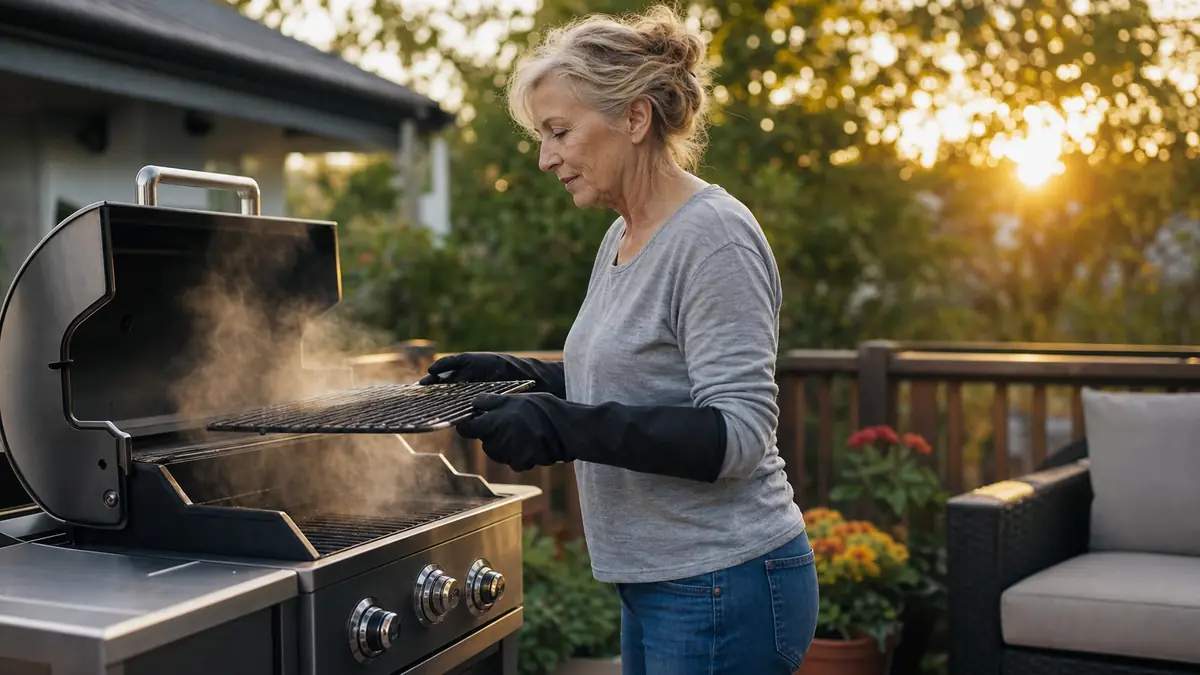
The first time I grabbed the edge of a hot grate without thinking, my three-burner gas grill had been running for twenty minutes and I was moving fast, plates stacked in one hand, tongs in the other, trying to pull the chicken off before Marco asked for the fifth time if it was ready yet. I touched the edge of the grate with the side of my wrist for maybe half a second. That was long enough to raise a welt that stung for two days. Hot grates do not care how many summers you have been grilling, and a folded dish towel is not protection.
That was the week I bought the GEEKHOM BBQ Gloves Heat Resistant, my first real pair of heat resistant gloves after two cheaper ones cracked at the seams and one started to melt at the fingertips. They are what I reach for now every single time I lift a hot grate, move cast iron, or pull a rack out of the smoker. This guide walks through exactly how I handle hot grates safely, step by step, the same way I would explain it to Bev if she asked me over the fence on a Sunday.
Stop Reaching for a Dish Towel Near an Open Flame
The GEEKHOM heat resistant gloves are 13.7 inches long, waterproof, and built with a non-slip silicone grip, so you can move hot grates, cast iron, and smoker racks with actual confidence instead of a folded towel and a wince.
Amazon Check Today's Price on Amazon →Step 1: Know What You're Actually Protecting Against
A grill grate that has been over direct flame for fifteen minutes is not just hot on the surface. It holds heat the way cast iron does, which means it keeps radiating warmth even after you pull it away from the burner. When I lift a grate to scrape underneath it or shift it to a cooler zone, I am not just avoiding a quick touch. I am handling something that stays dangerously hot for several minutes after it leaves the fire.
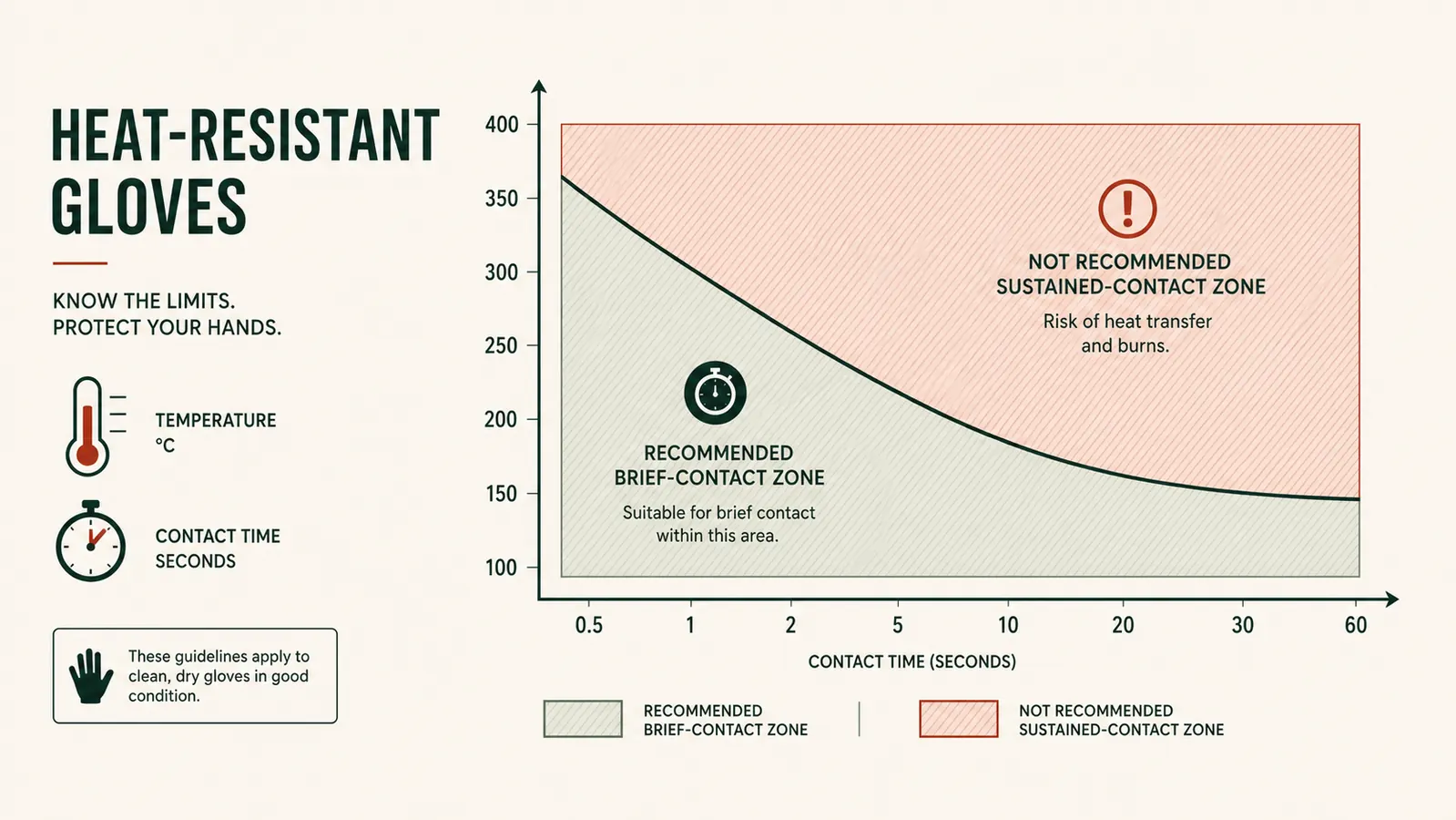
This is the part people underestimate most. Heat resistant gloves are rated for brief, direct contact, not for holding onto something glowing for a long stretch of time. I treat every task the same way regardless of what the gloves claim on the packaging. Get in, get the grate or the pan where it needs to go, and get back out. That mindset alone has kept me from ever testing the outer limit of what any glove can actually handle.
I also think about where the heat is coming from before I reach in. A hot grate radiates heat upward and outward, which means my forearms are exposed even when my palms are covered. That is one reason I moved to a pair that runs the full length of my forearm instead of a short oven mitt that stops at the wrist. It changes how much of my arm is actually protected during the two or three seconds it takes to move something off direct heat.
Step 2: Choose Gloves Rated for the Job You're Actually Doing
Not every heat resistant glove on the market is built for the same task. Some are made for pulling a tray out of the kitchen oven for a few seconds. Others are built specifically for outdoor grilling, where you are dealing with open flame, cast iron, and smoker components that stay hot far longer than anything coming out of an indoor oven. I made the mistake early on of buying a cheap pair meant for baking and expecting it to hold up on the back deck. It did not.
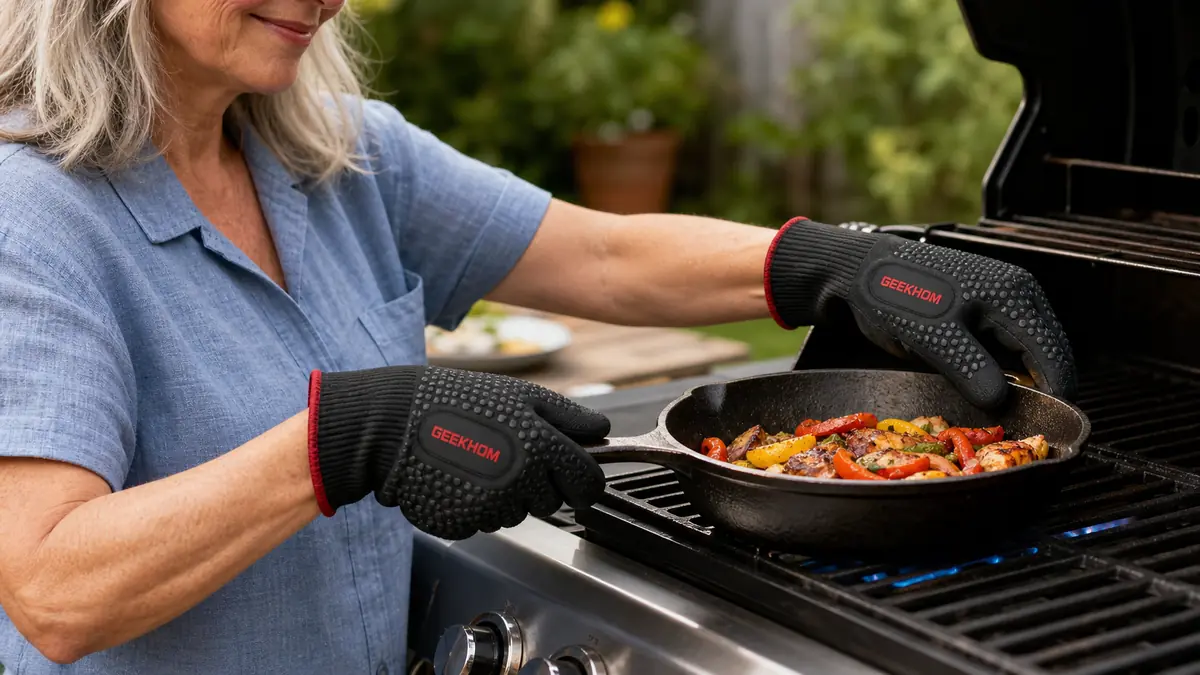
The GEEKHOM gloves work for me because they are built specifically with grilling and smoking in mind. The silicone is thick enough that I do not feel warmth coming through when I grip a hot grate for the few seconds it takes to reposition it, and the five finger design means I still have the dexterity to hold tongs or adjust a rack rather than fumbling around with stiff mitten hands. That dexterity matters more than people expect. A glove that protects you but takes away your grip just moves the risk somewhere else.
I also pay attention to length. The 13.7 inch coverage on mine reaches well past my wrist, which matters most when I am leaning over an open smoker to move a rack of ribs, or reaching past the front burner to adjust something toward the back of the grill. Short mitts leave a gap of exposed forearm right where a lot of accidental brushes against hot metal actually happen.
Step 3: Get the Grip and the Fit Right Before You Touch Anything Hot
I put the gloves on and check my grip before I ever approach the grill, not after. A glove that slides around on your hand is a liability once it is holding something hot, because your instinct is to grip tighter, which is exactly the wrong reaction when the goal is a quick, controlled motion. The GEEKHOM gloves have a textured, non-slip silicone surface across the palm and fingers, and I can feel the difference the moment I pick up a hot grate versus how a smooth cotton oven mitt used to slip against the same metal.
Fit matters just as much as grip. Gloves that are too loose bunch up at the fingertips, which is exactly where you need the most control when you are lifting a rack out of a smoker or repositioning a grate over a hot zone. Gloves that are too tight restrict the exact hand movement you need to set something down carefully instead of dropping it. I tried a men's sized pair before finding the right fit for my hands, and the difference in confidence was noticeable within the first cookout.
One habit I picked up after that first burn is checking that my hands and the gloves themselves are completely dry before I start. Water conducts heat, and a damp glove interior can turn a brief safe contact into something that hurts. Since these gloves are waterproof on the outside, I can wipe grease or marinade off the surface mid-cook without soaking through to my skin, but I still make sure the inside is dry before I put them on in the first place.
Step 4: Use the Right Motion When You Handle Hot Grates and Cast Iron
Wearing heat resistant gloves does not mean you can be careless about how you move. I still approach a hot grate the same deliberate way every time. Both hands, a firm two-point grip, and I lift straight up rather than dragging the grate sideways across the burner where it can catch and tip. That same principle applies to cast iron. I grip the handle fully, not just with fingertips, before I lift a heavy skillet off the grate, because a partial grip is how pans get dropped even with good gloves on.
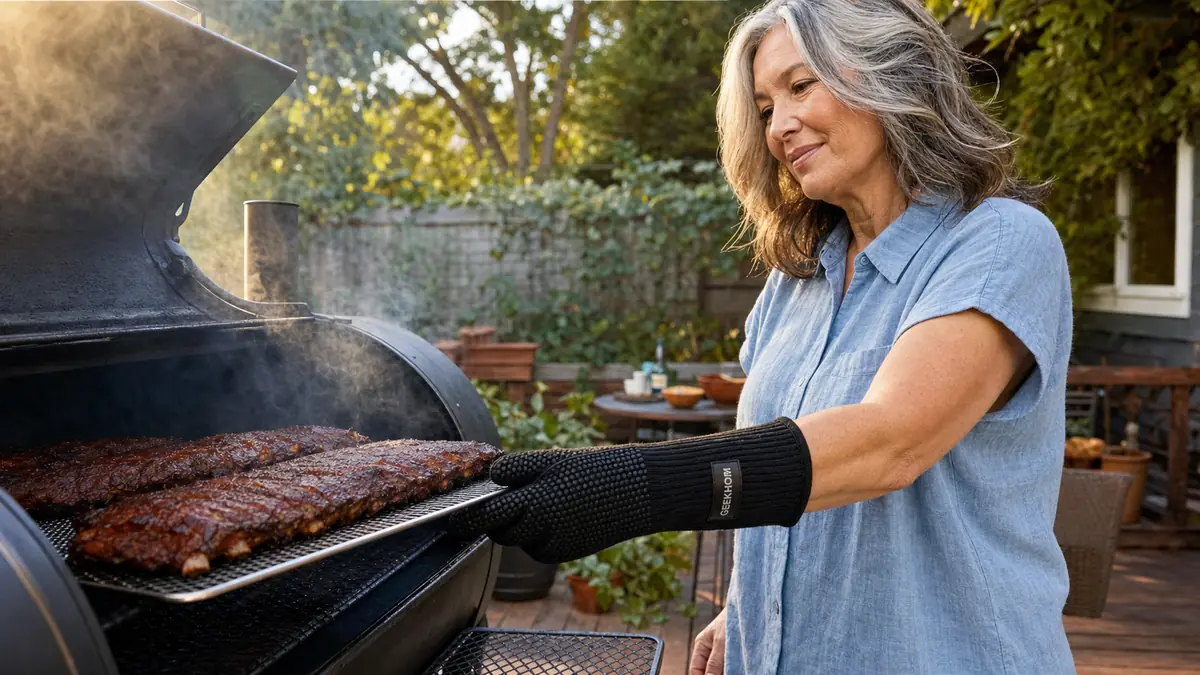
For smoker racks, I go slow on the way out more than the way in. Sliding a rack of ribs or a brisket out of a smoker means the weight shifts as it clears the opening, and that is when an unbalanced grip turns into a dropped rack or a hand brushing against the hot interior wall. I keep my forearms angled slightly away from the smoker body as I pull, which is exactly the kind of move the longer glove length is built for.
I also never use these gloves as an excuse to hold something hot longer than necessary just because my hands feel protected. If I am holding a grate to scrape it clean, I set it down on a heat safe surface first rather than holding it mid-air the whole time. Sustained contact with anything glowing or scorching hot is not what any heat resistant glove is designed for, no matter how good it feels in the moment. Short, purposeful contact is the whole point.
Step 5: Care for the Gloves So They Keep Protecting You
A heat resistant glove that has cracks, thin spots, or a torn seam is not offering the protection it claims to anymore, and I check mine before every single use out of habit at this point. Silicone holds up well over time, which is part of why I have stuck with the same pair through two full grilling seasons, but it is not indestructible. If I ever see a crack forming near a seam or a spot where the silicone has thinned from repeated contact with hot metal, that pair gets retired, no exceptions.
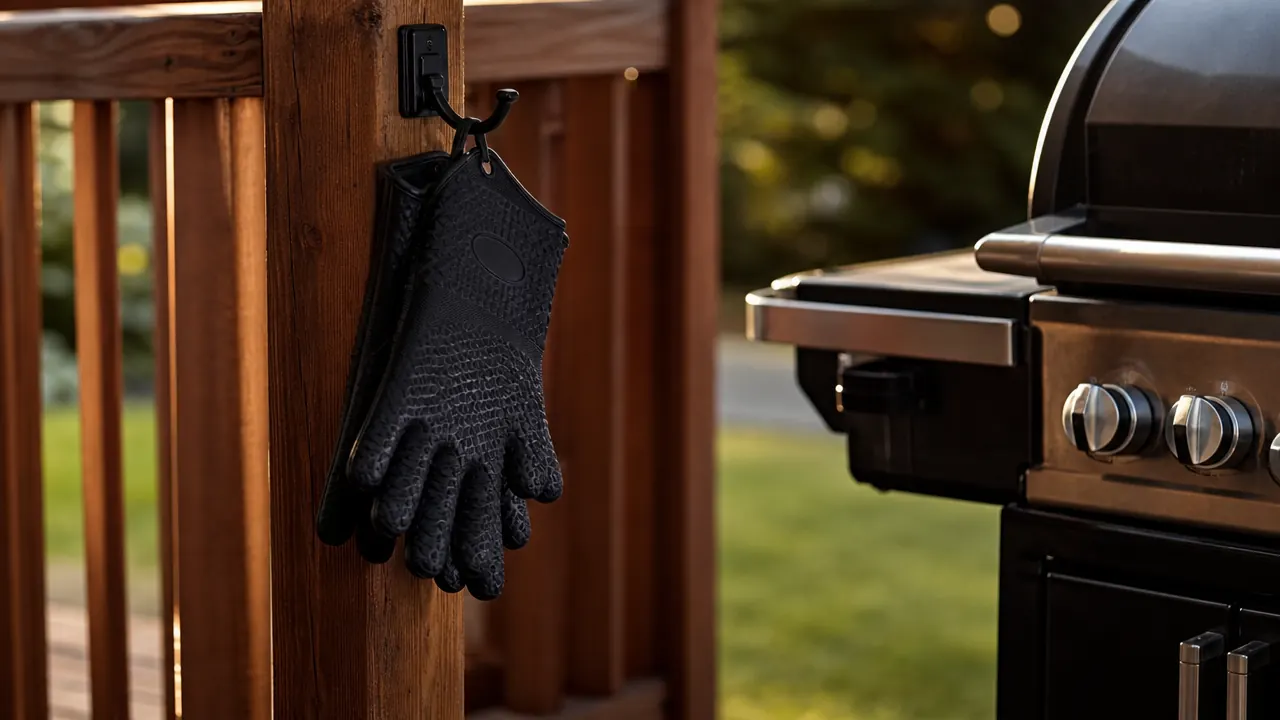
Cleaning matters more than people think too. Because these are waterproof, I can rinse grease and barbecue sauce off after a cookout instead of letting residue bake into the material session after session, which is exactly the kind of buildup that weakens silicone faster than the heat itself does. I hang mine to dry on a hook near the grill rather than balling them up in a drawer, which keeps them fully dry inside before the next use and helps them keep their shape.
If you want the fuller picture of how these have held up for me over a longer stretch of regular use, including where I think they genuinely earn their price and where they fall short, I wrote about that in detail in my long-term GEEKHOM gloves review. And if you are weighing this pair against another popular option before you buy, I put together a side by side breakdown in GEEKHOM versus RAPICCA heat resistant grill gloves that covers what actually differs between silicone and neoprene builds.
What Else Helps
Good heat resistant gloves solve most of the danger around hot grates, but they are not the only thing that keeps a cookout safe. I keep a metal spatula and long tongs within reach so I am not using my gloved hands to grip food directly near open flame more than I have to. A stable spot to set hot grates and cast iron down, away from the edge of the deck railing and away from where Sofia and Marco are running around, matters just as much as what is on my hands. Ray keeps the music going from the deck speaker while I work, which sounds unrelated, but staying relaxed instead of rushed is honestly part of why I have not had a real burn since that first week.
I also keep a second pair on hand during the busiest cookouts, because there is nothing worse than realizing your gloves are still damp from the last rinse right as Paul is handing you a hot rack of ribs to plate. Between the fuel side of things and the hands-on side, a lot of small habits stack up into one safe routine. If low and slow is more your speed than direct grilling, the same care around heat applies to what you are burning, and I broke down what actually changes the flavor of a long smoke in how I choose wood pellets for smoking.
Heat resistant gloves protect your hands for a few deliberate seconds of contact. They are not a reason to get careless, and they are not a substitute for slowing down.
Grab the Grate With Confidence, Not a Dish Towel
Two grilling seasons in, this is still the pair I put on before I ever touch a hot grate, cast iron skillet, or smoker rack. The GEEKHOM heat resistant gloves are the one piece of grill safety gear I do not cook without anymore.
Amazon Check Today's Price on Amazon →