
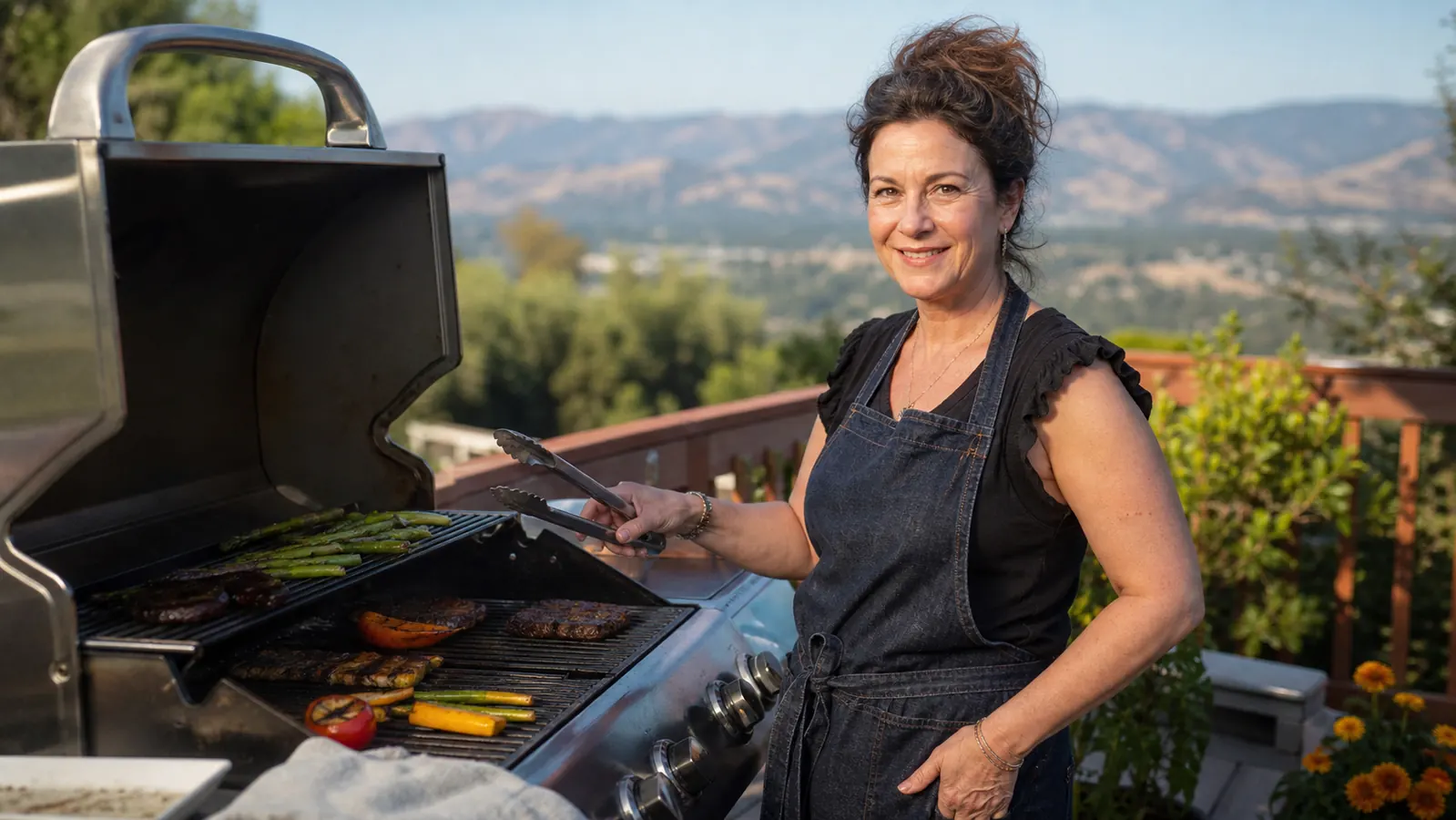
Last September, on a warm Sunday in the East Bay hills, I ruined a beautiful ribeye in front of my whole family, and it took a twelve-dollar gadget called an Alpha Grillers thermometer to make sure it never happened again. Ray had the speakers going on the deck, something warm and low, the kind of music that says nobody is in a hurry. Bev had already shown up with her usual bottle of red before I had even lit the grill. Nina, Paul, and the grandkids, Sofia and Marco, were chasing our dog around the yard while I stood over my three-burner gas grill pretending I knew exactly what I was doing.
I have been cooking for this family for decades, first over Ray's old charcoal kettle, the one I still keep in the corner of the deck after twenty years, and later on the gas grill Ray talked me into for busy weeknights. But for all that time, I judged doneness the way my mother did, by poking the meat with my finger and hoping. That Sunday I poked, decided the ribeyes were close enough, and pulled them off about ten minutes too late. Paul, ever polite, cut into a slab of gray, chalky meat and said nothing. Sofia was the one who said it out loud. Grandma, it is like a hockey puck.
Nobody said another word about it, which somehow made it worse. Bev poured me more wine and changed the subject to her tomatoes. Ray turned the music up half a notch, which is his way of smoothing things over. But I sat at the end of our long table that night, picking at a ribeye I was too proud to admit I had wrecked, and I decided I was done guessing. Eighteen years of cooking for this crowd, and I still could not tell medium from well done until it was already too late to fix.
The next morning I asked Nina what she used when she cooked chicken for her family, since her chicken never came out dry the way mine sometimes did. She laughed and said it was not skill at all, it was a five-second read on an instant thermometer she kept in a kitchen drawer. I looked it up that afternoon and kept landing on the same name over and over in the reviews: Alpha Grillers. Tens of thousands of people had rated it, and most of them sounded exactly like me, tired of guessing, tired of ruining good meat in front of people they loved.
Eighteen years of cooking for this family, and I finally admitted the truth: I was seasoning beautiful cuts of meat and then cooking them blind.
Stop Guessing at the Grill
If you have ever pulled meat off early out of nerves, or late out of guilt for making everyone wait, the fix is not more practice. It is knowing the number before you commit.
Amazon Check Today's Price on Amazon →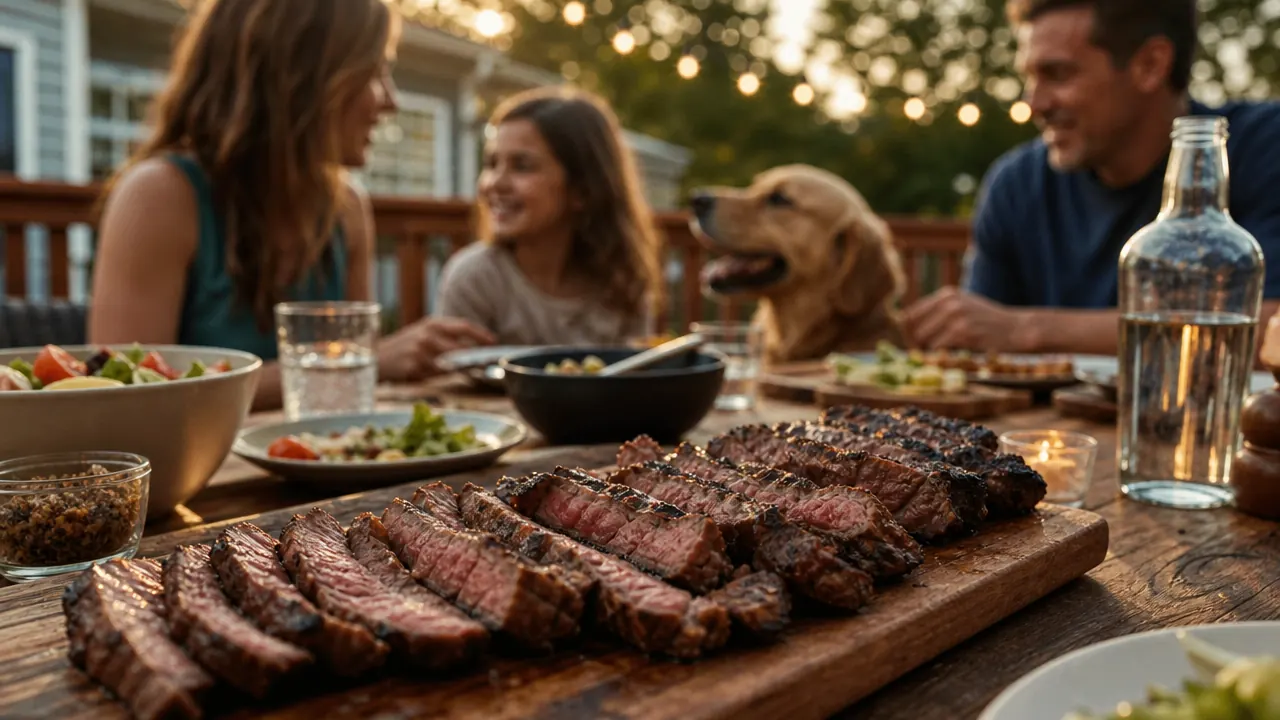
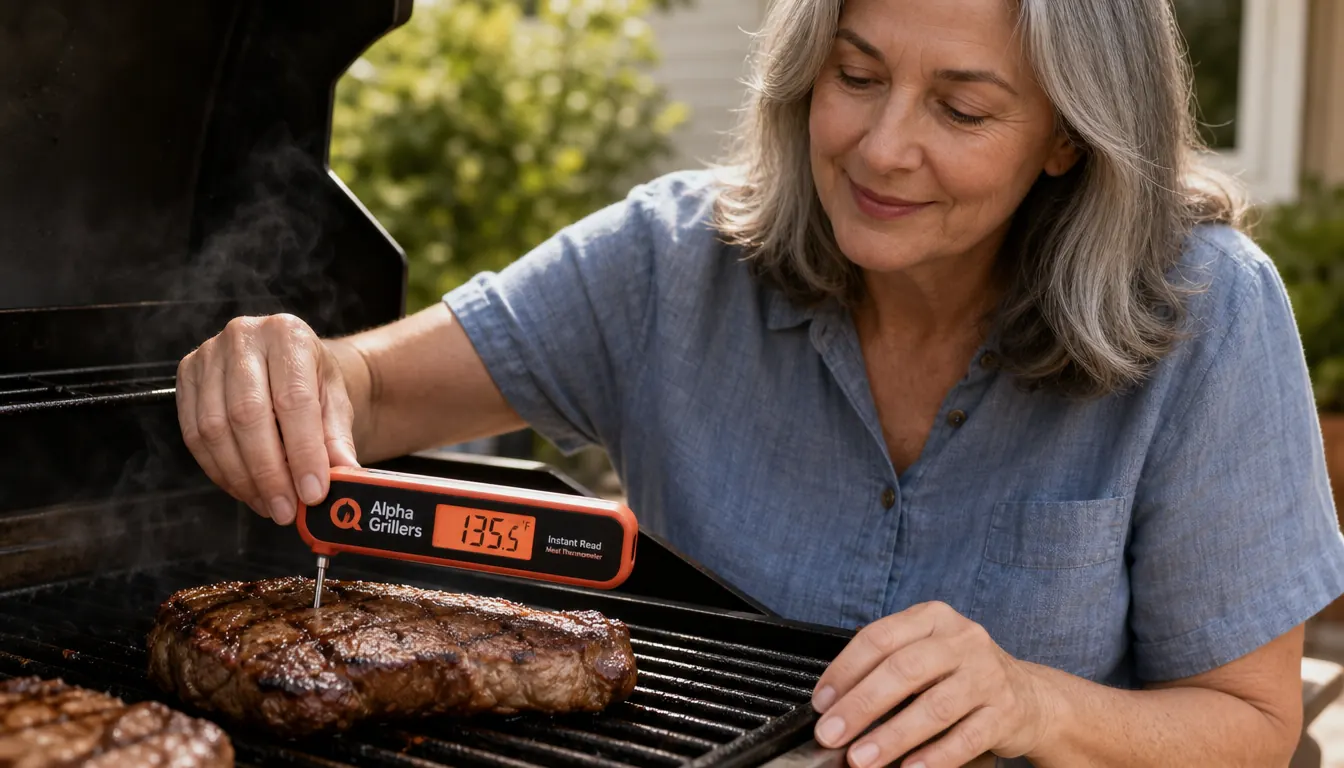
The Alpha Grillers thermometer showed up two days later, small enough to fit right in the drawer where Nina keeps hers. The first time I used it was on a plain Tuesday, just Ray and me, nothing fancy, two chicken thighs on the gas grill. I slid the probe into the thickest part, away from the bone, and had a number on the backlit screen in under two seconds. No guessing, no cutting the meat open to check, just a clear number telling me exactly where I stood.
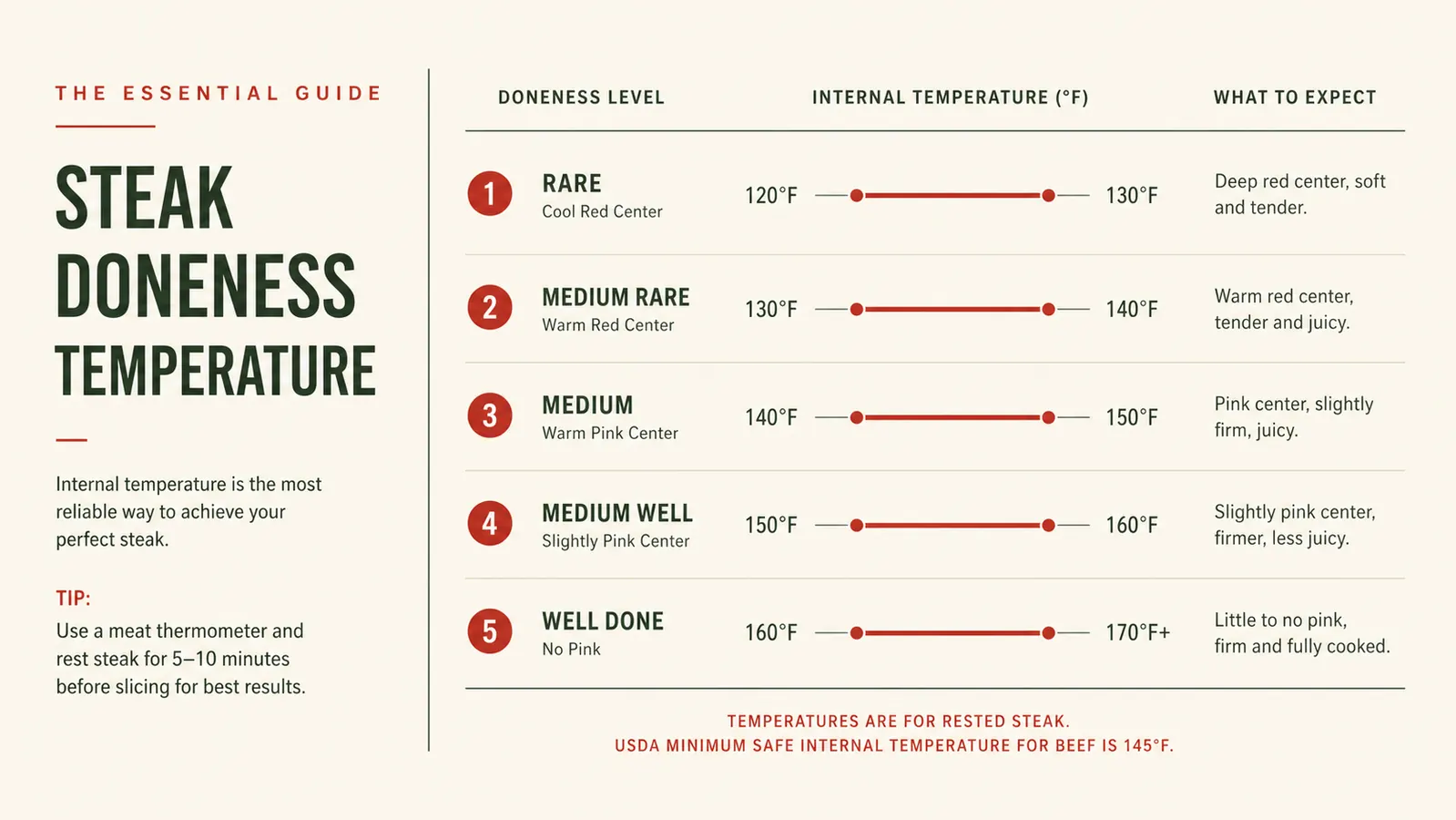
I waited for the following Sunday to really test it, when Bev and the whole family were back at our long table. I pulled the ribeyes at exactly 130 degrees for medium rare, let them rest under foil, and watched Paul cut into meat that was pink from edge to edge with no apology needed this time. Marco asked for seconds. Sofia did not compare anything to a hockey puck. Ray turned the music up the way he does when a cook goes right, and Bev asked to borrow the thermometer for her own cookout the following week.
Since then the Alpha Grillers thermometer has become the one tool I genuinely cannot cook without, on the gas grill, on the old charcoal kettle, even checking the turkey at Thanksgiving. It reads fast enough that I am not standing over a hot grill with the lid up losing heat while I wait, and the display is bright enough to see once the sun drops behind the hills, which matters more than I expected once the evenings got shorter.
If you want the longer version, I wrote out a full season's worth of notes on how it has held up on everything from weeknight chicken to holiday brisket, plus how it stacks up against pricier options like a Thermapen if you are trying to decide between the two.
What I'd Tell You If We Were Sitting at My Kitchen Table
If you were sitting across from me at that long table, I would not tell you that a thermometer fixes bad technique, because it does not season the meat and it does not manage your fire for you. What it does is take away the one guess that ruins an otherwise good cook. I spent eighteen years trusting my finger and my instinct, and I lost more good cuts of meat than I want to admit before I finally let a twelve-dollar tool tell me the truth. If you have ever stood at your own grill hoping you pulled the meat at the right moment, that is reason enough to stop hoping and start checking.
Don't Let the Next One Turn Gray
A good ribeye deserves better than a guess. See why so many backyard cooks keep this thermometer in the same drawer, year after year.
Amazon Check Today's Price on Amazon →