
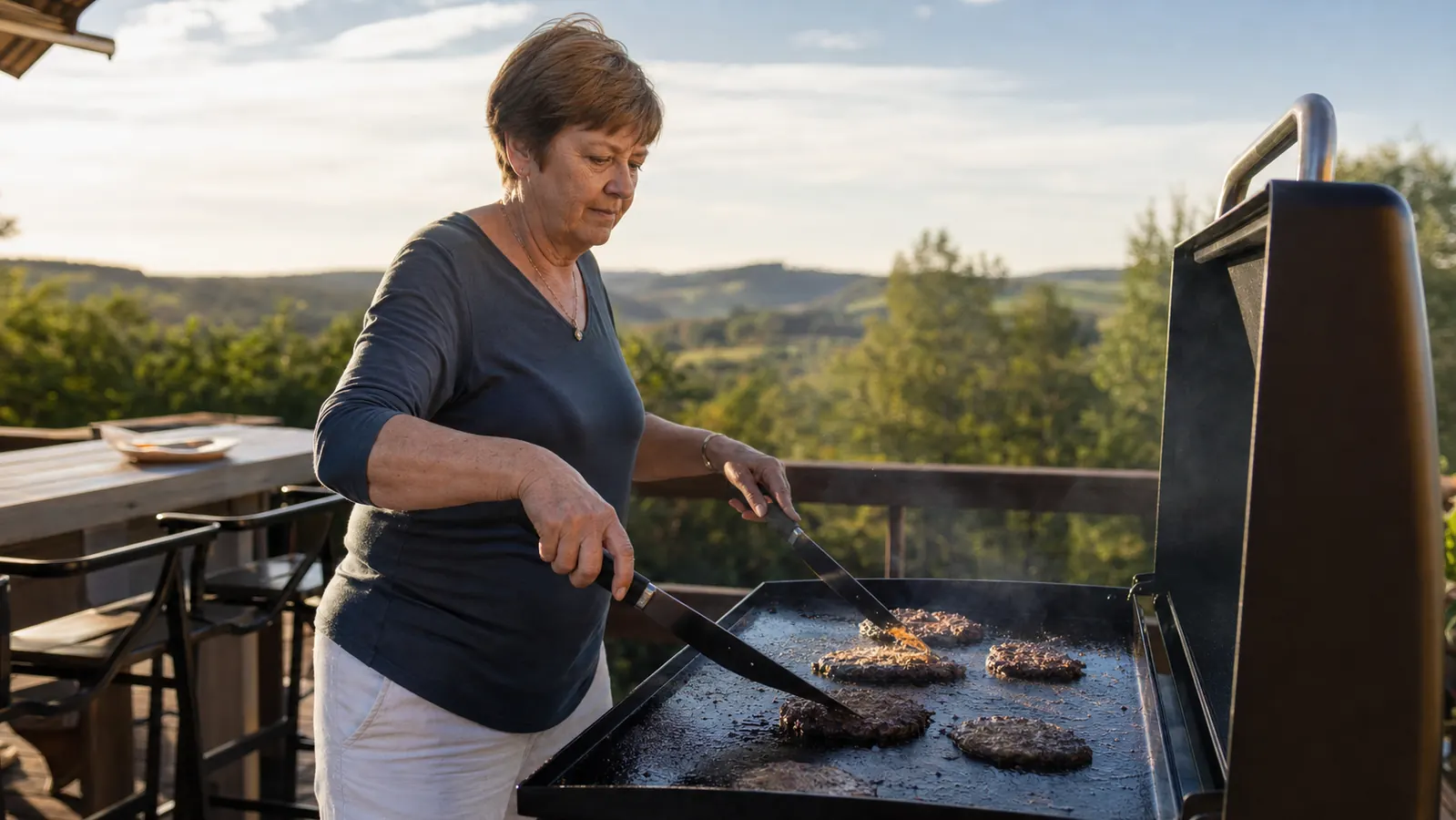
I have had the same charcoal kettle for twenty years. It has cooked ribs for graduations, burgers for the Fourth of July, and more chicken thighs than I could count for Sunday dinners with Bev. I am not getting rid of it, and this isn't an argument to. But three summers ago my son-in-law Paul talked me into setting a Blackstone 28 inch griddle down on the deck next to the kettle and the three-burner gas grill, and it has quietly taken over more of my weekly cooking than I expected it to. This isn't charcoal-bashing. It's ten honest, specific reasons the Blackstone earns its spot, especially on mornings when Sofia and Marco are underfoot and Sunday dinner for the whole family is only six hours away.
Ray still argues a hot kettle sears a steak better than any flat top, and on that one point he's right. But for the volume of cooking that actually happens on a normal week around here, the Blackstone has become the workhorse on my deck. Here are the ten reasons it keeps winning that argument at my house, even against a charcoal grill I genuinely still love.
The Griddle That Turned Feeding a Crowd Into an Actual Plan, Not Crowd Control
The Blackstone 28 inch Omnivore griddle puts a flat, even cooking surface on the deck alongside your charcoal grill instead of arguing with it, and it changes what a Sunday morning at my house actually looks like.
Amazon Check Today's Price on Amazon →One Flat Surface Means No Hot Spots to Fight
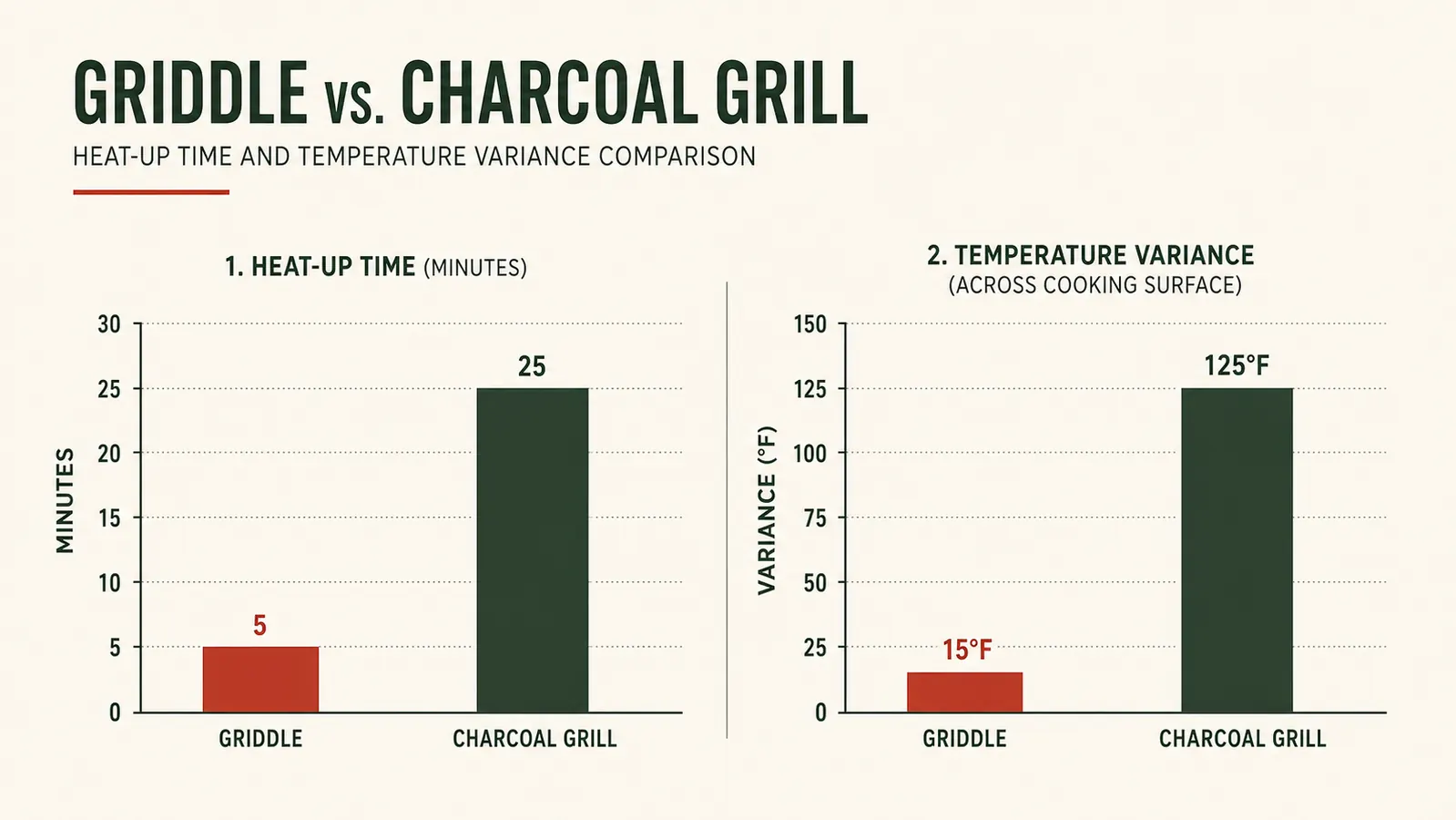
Charcoal piles heat unevenly no matter how carefully you bank the coals, so you're always shuffling food between the hot side and the cooler side. The griddle's flat steel surface heats evenly across zones you actually control with dials, so a smash burger on the left cooks the same as one on the right. I stopped playing hot spot roulette with my kettle the week I started using the griddle for anything that needed consistent heat, like a full batch of pancakes for Sofia and Marco.
It's Ready to Cook in Ten Minutes, Not Forty
Lighting a chimney, waiting for the coals to ash over, then spreading them just right can eat up almost forty minutes before the first burger hits the grate. The griddle's burners get the surface hot enough to cook on in about ten minutes, which matters on a weeknight when Nina calls to say she and Paul are stopping by in half an hour and I have nothing planned yet.
Breakfast for a Full House Actually Works
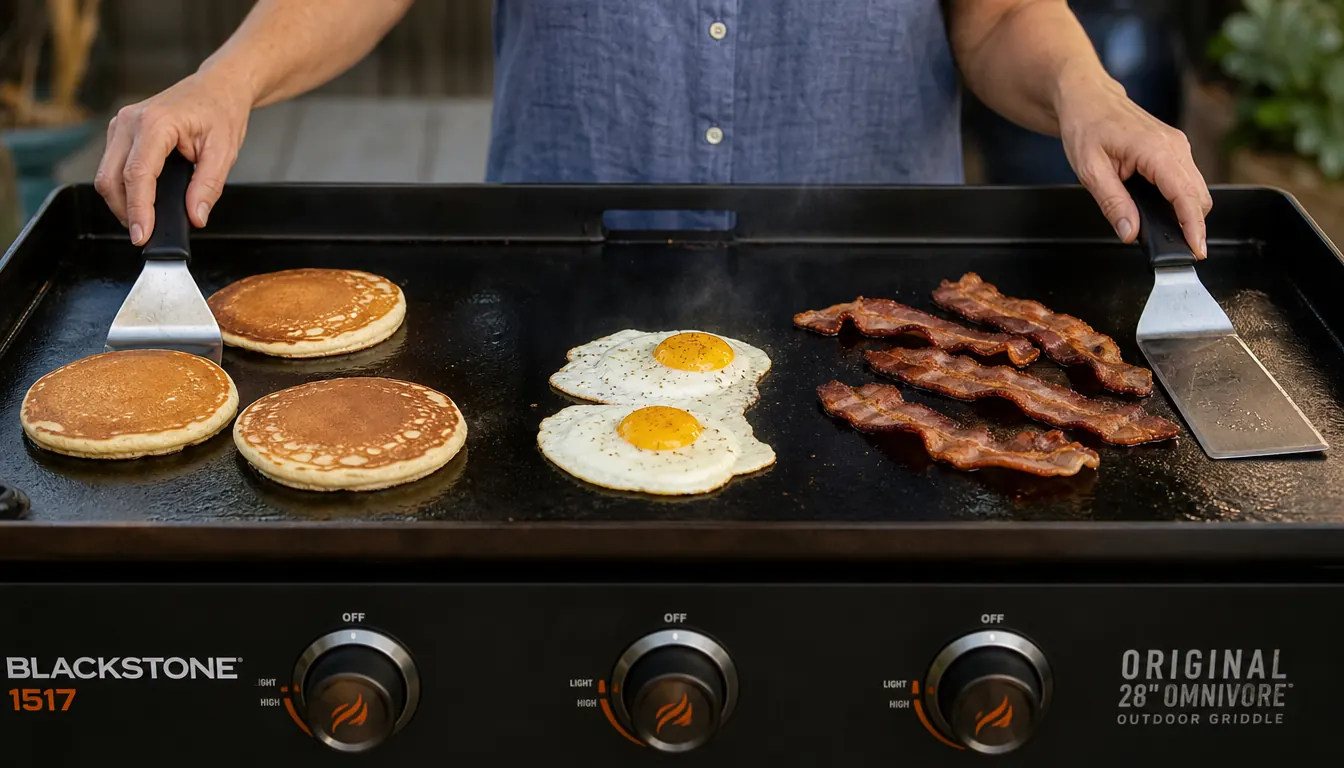
Charcoal is not really built for eggs, pancakes, or hash browns. The griddle handles all three at once, which is why weekend breakfasts at my house turned into a bigger event once I had a flat top instead of just a kettle and a gas grill. I can run bacon on one zone, eggs on another, and hash browns crisping on a third, all finishing at roughly the same time instead of in shifts.
No Flare-Ups Chasing Grease Around the Grates
Dripping fat on a charcoal grill means flare-ups, and flare-ups mean scorched food and a scramble with the lid. The Omnivore's rear grease management system channels fat away from the cooking surface into a cup instead of letting it hit an open flame, so a batch of bacon or sausage doesn't turn into a small fire drill. I've cooked plenty of greasy breakfasts on this griddle without once reaching for the hose.
Four People Can Cook Four Different Things at Once
A charcoal grill really only has one real heat zone worth trusting for delicate food. The griddle's independent burners let me run four different things across the surface at the same time, quesadillas on one end and shrimp on the other, without any of them picking up flavor from the rest. When Bev shows up with her coleslaw and everyone wants something slightly different, the griddle handles it without a traffic jam.
Cleanup Is a Scrape and a Squeegee, Not an Ash Bucket
Cleaning a charcoal kettle means waiting for the coals to cool completely, then bagging up ash without dumping it across the deck. Cleaning the flat top is a scrape with the metal spatula, a wipe with a squeegee, and a light oil pass while it's still warm, done in about five minutes. On a Sunday when Bev and the grandkids are still at the table, that difference means I'm not the last one to finally sit down.
It Travels Better for Camping and Tailgates
This griddle is built for camping, and it shows. No bag of charcoal to haul, no ash to deal with at the campsite, just a propane tank and a flat cooking surface that folds down on locking legs. On our last group camping trip, Paul brought his griddle instead of a cooler full of charcoal, and it's now the reason our whole crew cooks camp breakfast on a flat top instead of over a fire pit.
Grandkids Can Actually Help Without Getting Near Open Flame
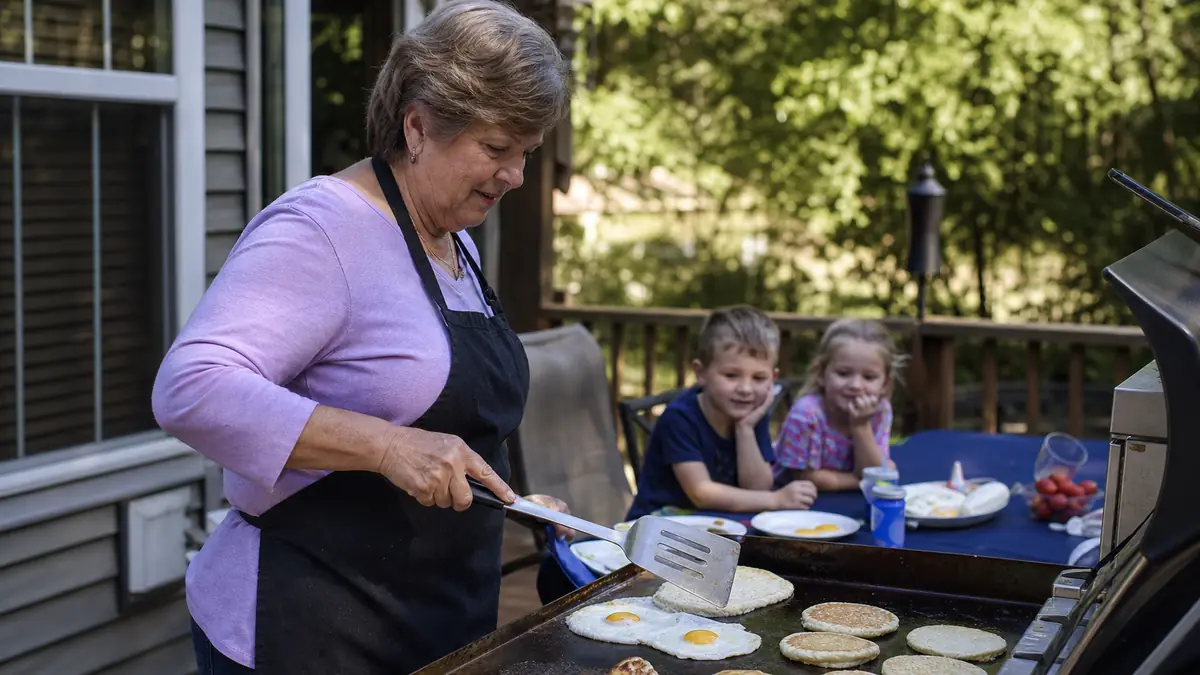
There's no open flame licking up around the food on a griddle, which matters when Sofia, who is nine, wants to help flip pancakes. She can stand close to the cooking surface and reach it with a spatula under supervision, something I would never let her try at the charcoal kettle. Marco, at six, mostly just watches, but even he understands this is the grill he's allowed nearer to.
Grilling Season Doesn't End When the Wind Picks Up
Wind plays havoc with charcoal, stealing heat and making coals burn unevenly or too fast. The griddle's low, flat profile and enclosed burners hold temperature far more predictably in a breeze, which stretches my cooking season later into the fall than the kettle ever managed alone. For a full rundown of what got me hooked in the first place, my long-term review of the Blackstone covers a full season of exactly this.
It Handles the In-Between Meals Charcoal Never Gets Credit For
Charcoal is for the meal you plan around, a rack of ribs on a Saturday, a whole chicken on a Sunday. The griddle is for the fifteen meals in between, the Tuesday quesadillas, the Thursday fried rice, the random grilled cheese for Marco after school. Those in-between meals add up to more actual cooking time than the big weekend cooks ever did, and that's where this griddle quietly earns its keep. If you're weighing it against another popular flat top, my side-by-side comparison breaks down where each one wins.
What I'd Skip
I wouldn't buy a griddle expecting it to replace charcoal entirely, and I wouldn't buy the smallest griddle size just to save a little money either. A rack of ribs or a whole smoked brisket still belongs on the kettle, low and slow, over real coals, and no flat steel surface changes that. What I would do is what I actually did: keep the charcoal grill for the meals that need it, and let the Blackstone handle the daily volume of cooking that used to make me dread firing up the kettle for something simple. That balance has worked at my house for three summers now.
The charcoal kettle is for the meal you plan around. The Blackstone is for the fifteen meals you didn't.
Ready to Stop Choosing Between Breakfast and a Clean Deck
The Blackstone 28 inch Omnivore griddle sits next to my charcoal kettle, not instead of it, and it's the one I actually reach for most weeks.
Amazon Check Today's Price on Amazon →